
“A Note to My Translator”
Part I of An Oral History of AN ORAL HISTORY OF ATLANTIS

EP: Two nights ago—or three—never mind how long ago exactly, I launched An Oral History of Atlantis at (appropriately enough) McNally Jackson’s Seaport location, a totally charming and well-stocked two-story bookery on cobblestoned Fulton Street. I say appropriately because the title track begins in this region of Manhattan, where my diminutive narrator spies on his solitary neighbor, the mysterious mystery writer’s writer Walter Walter, who pecks out his strange manuscripts across the street. I say appropriately because of the title: Atlantis. I say appropriately because the streets at the southern tip of Manhattan get a little screwy, the layout of the store itself is wonderfully twisty—and the evening turned out to be (thanks to my interlocutor, Rachel Aviv) a circuitous trip into my past. (I say appropriately because today, 8/1, is Herman Melville’s birthday, and whales play no small part in our hero’s rovings.)
Rachel is one of the great journalists of our age, but as soon as she spoke—each word of her intro threatening to provoke tears—I was shuttled back to 2004, when she was my trusty intern at The Village Voice.
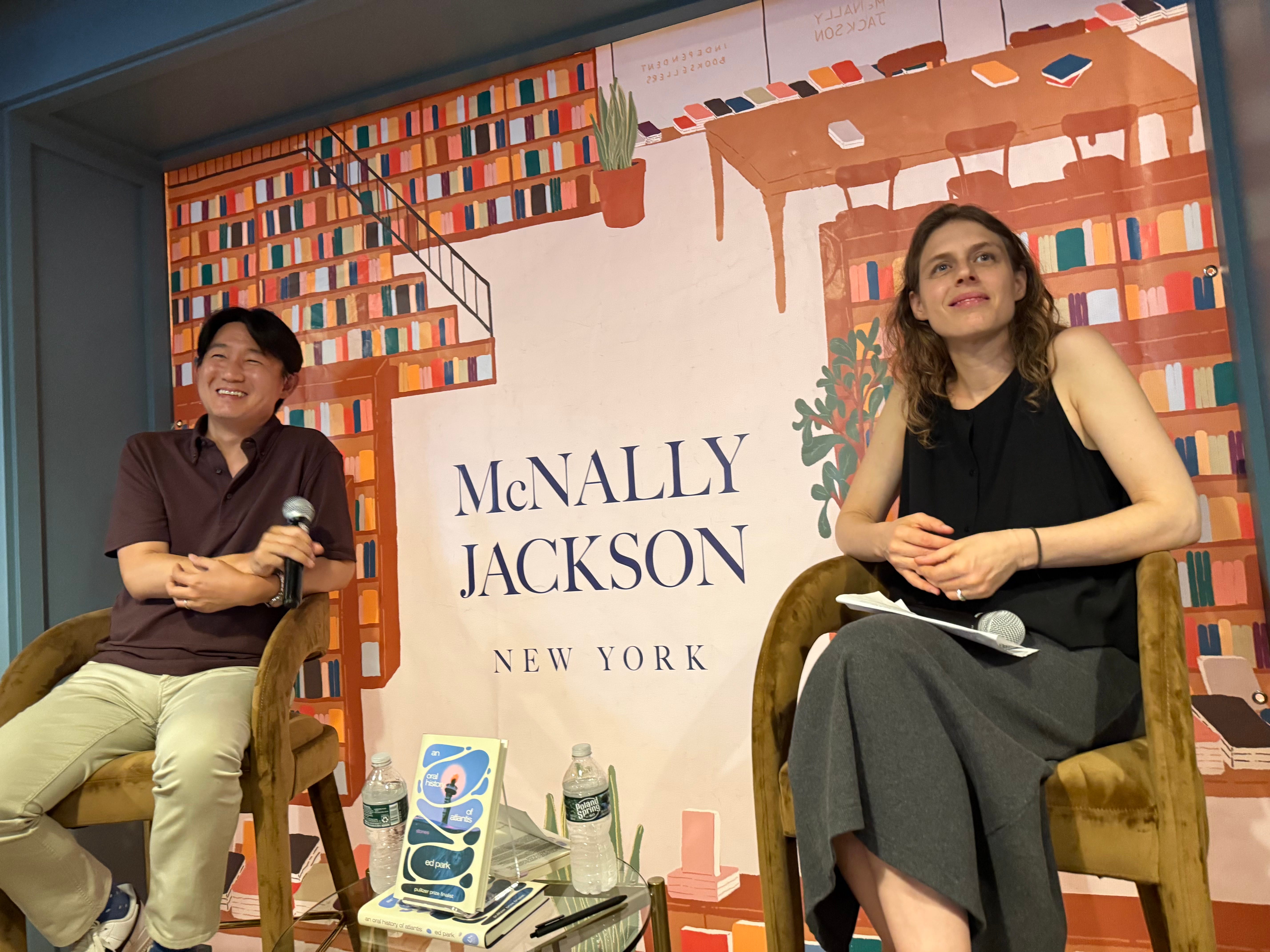
Photo: Ellen Umansky
Early in our talk, she asked about “Hans de Krap,” the narrator of “A Note to My Translator,” the first story in the collection; he’s a fuming foreign author of some renown, apoplectic over how his novel is being rendered in English.1
I spoke about how, in 1997 (several years before we met), I had come across this ad in the Village Voice, where I was already employed as a copy editor.
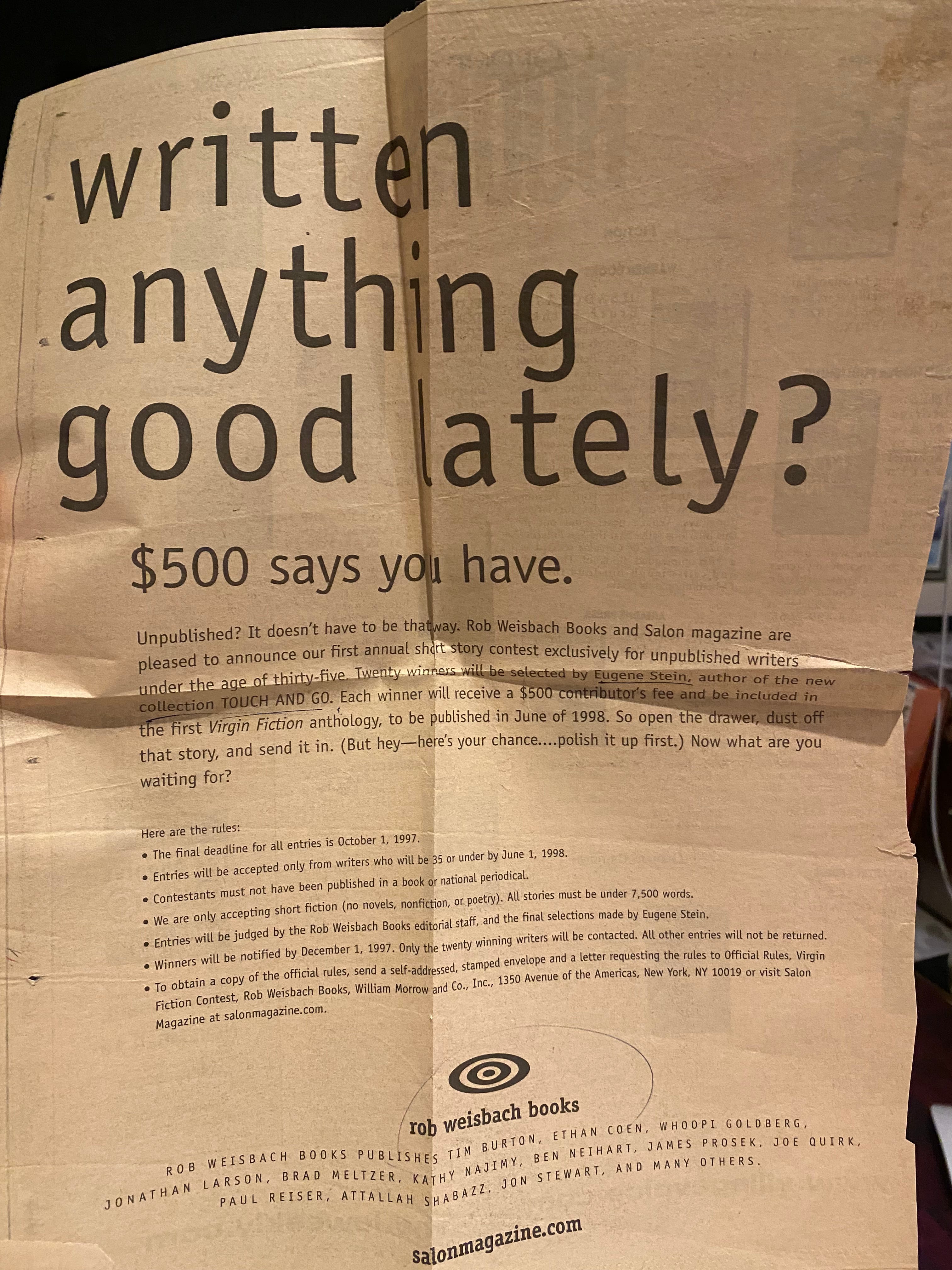
A full-page ad! Seeking a score of unpublished authors, for a book called Virgin Fiction! The imprint had celebrities in its stable, and was somehow connected to Salon—when you still had to type “salonmagazine.com”—then a daily internet stop for many, in that antediluvian era of scant content.
Most messages the world flings our way just bounce off the eyelids, but every so often you see something and it changes your life. In the aftermath of my first failed novel—a behemoth that never found a home—the ad copy felt like a challenge. Had I written anything good lately? Then prove it!2
Behind Rachel’s question was a tidbit of personal history I’d forgotten. She got me to confess that I would periodically write listings for the Voice Choices section using the arch-scatological surname “De Krap.” In retrospect this was not a great idea; at the time, though, as she pointed out, I worried about seeming too productive.3 There might be a week when I would publish, say, a book review and a film review, plus maybe a capsule review, in the paper. Not that anyone was keeping track4
I can’t remember if I said this at the event, but there’s a reason I chose “De Krap” as the surname of both my journalistic alter-ego and my virgo-fictional stand-in.
No spoilers. But the hopelessly curious can write DE KRAP in all caps, and hold it to a mirror.
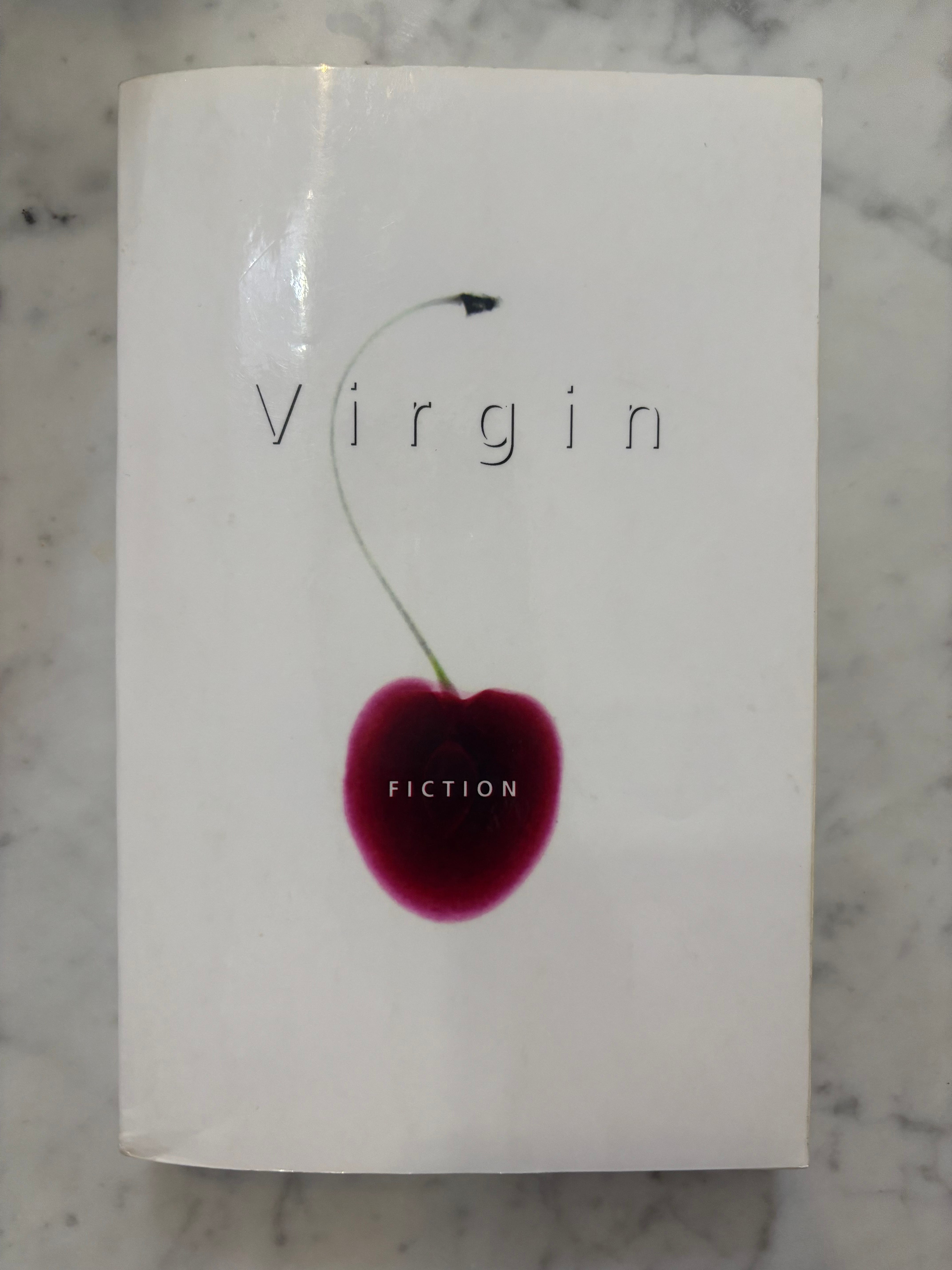
Readers of the Lost ARC: Also has the first publication by Myla Goldberg, eventual author of Bee Season.
The narrator of “An Oral History of Atlantis,” the final story in the collection, is named Hans—a small but significant adjustment I made as I put the book together. Otherwise it remains much as I wrote it back in Summer 2001—about which, more later.
This was before I began writing for the Voice in earnest—i.e., before editors regularly asked me to do so. That wouldn’t happen for a few more years.
“Did you feel you suffered from (or had the gift of) ‘insane productivity’ yourself? What do you mean by the word insane?” —RA to EP, 2008.
Another age-old alter-ego of mine, albeit with no bylines to his credit, was Parker Edwards, whose name was a simple reversal of my own. I later used this name for a major character in my 2023 novel Same Bed Different Dreams, later changing it to Parker Jotter.